Published 1/2026
MP4 | Video: h264, 1920×1080 | Audio: AAC, 44.1 KHz, 2 Ch
Language: English | Duration: 1h 37m | Size: 2.15 GB
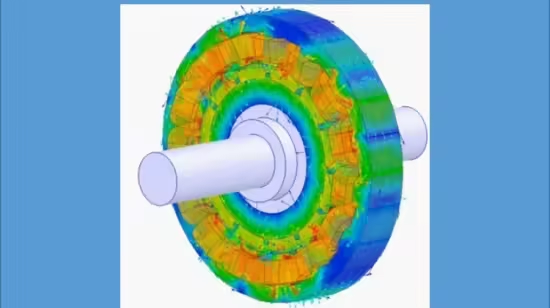
Learn BLDC motor simulation in ANSYS Maxwell—B–H curves, RMxprt → Maxwell 2D/3D, and performance curves
What you’ll learn
Set up magnetostatic and transient simulations in ANSYS Maxwell (2D & 3D) for permanent-magnet BLDC motors.
Import, scale, and validate B–H curve data; assign magnetic materials correctly and avoid common unit mistakes.
Design a PM BLDC motor in RMxprt and convert it to Maxwell 2D/3D with correct motion, bands, and excitations.
Generate and read key BLDC curves: speed, torque, current, input/output power, and efficiency.
Run no-load and loaded cases, extract steady-state data, and identify the peak-efficiency operating point.
Use field visualization and animations to verify results and troubleshoot typical setup errors.
Requirements
ANSYS Electronics Desktop (Maxwell + RMxprt) installed. A student/trial/commercial license is fine.
Basic understanding of voltage, current, torque, and rpm. No prior Maxwell experience required.
Optional: basic motor terminology (stator, rotor, poles, slots).
Description
Course DescriptionIf you want to learn BLDC motor simulation in a structured and practical way using ANSYS Maxwell, this course is the best place to start. This is not a “click-and-run” tutorial. Instead, you will follow a real engineering workflow and learn how to generate reliable, repeatable results.What you will learnGet comfortable with Maxwell 3D magnetostatic analysis to understand flux paths, flux density, and saturationSet up magnetic materials correctly by importing and validating B–H curve data (units, curve checking, and material assignment)Design a permanent-magnet BLDC motor in RMxprt and convert the model to Maxwell 2D/3DRun transient simulations and generate key performance plots: current, torque, input power, output power, efficiency, and speedCompare no-load vs. loaded cases, extract steady-state data, and identify the peak-efficiency operating pointWho this course is forComplete beginners who want to learn BLDC simulation in Maxwell from scratchMotor design/CAE engineers who want a fast RMxprt → Maxwell 2D/3D workflowStudents working on BLDC projects or researchBy the end of the course, you will be able to build your own BLDC simulation model and confidently produce performance curves and engineering conclusions in ANSYS Maxwell.OutcomeYou will finish the course with a complete simulation workflow and a set of BLDC performance curves that you can reuse for your own motor projects.
Password/解压密码www.tbtos.com